40+ Bible Verses About Leaves: Hope, Peace, and Spiritual Symbolism
Published: 21 Aug 2026
Bible verses about leaves run from the very first pages of Scripture to the very last. Adam and Eve sew fig leaves together to hide in Genesis 3. A dove returns to Noah’s ark with a single olive leaf in its beak. A tree by the water keeps leaves that never wither in Psalm 1. Jesus points to a fig tree coming into leaf as a sign that summer is close. And in the final chapter of the Bible, the leaves of the tree of life are given for the healing of the nations. Below are 45 verses about leaves, quoted rather than summarised and grouped by what the leaves are actually doing in the passage, along with a symbolism table, a look at the striking link between Genesis 3 and Revelation 22, and two short prayers for a season that feels dry.
Leaves as a Sign of Life and Flourishing
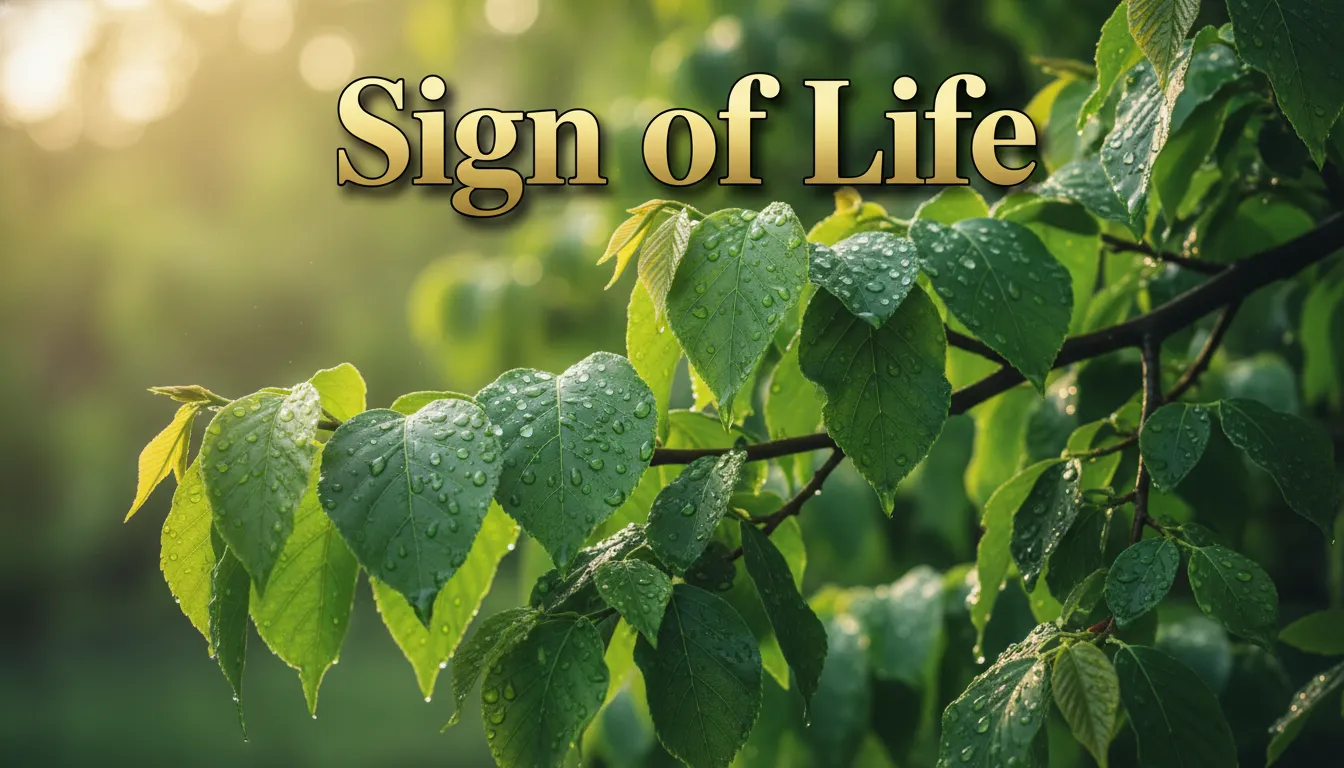
The most common use of leaves in Scripture is as a picture of a life that is being fed from somewhere. A tree cannot manufacture green leaves out of willpower. It draws water through roots it cannot see. That is the whole point of the comparison.
- Psalm 1:3 – “That person is like a tree planted by streams of water, which yields its fruit in season and whose leaf does not wither, whatever they do prospers.” The leaf is not green because of the weather. It is green because of where the tree is planted.
- Jeremiah 17:8 – “They will be like a tree planted by the water that sends out its roots by the stream. It does not fear when heat comes; its leaves are always green. It has no worries in a year of drought and it never fails to bear fruit.”
- Proverbs 11:28 – “Those who trust in their riches will fall, but the righteous will thrive like a green leaf.” One of the most direct leaf images in the Bible, and it is set against the false security of money.
- Psalm 92:12-14 – “The righteous will flourish like a palm tree, they will grow like a cedar of Lebanon; planted in the house of the Lord, they will flourish in the courts of our God. They will still bear fruit in old age, they will stay fresh and green.”
- Job 14:7-9 – “At least there is hope for a tree: If it is cut down, it will sprout again, and its shoots will not fail. Its roots may grow old in the ground and its stump die in the soil, yet at the scent of water it will bud and put forth shoots like a plant.”
- Jeremiah 11:16 – “The Lord called you a thriving olive tree with fruit beautiful in form.”
- Hosea 14:5-6 – “I will be like the dew to Israel; he will blossom like a lily. Like a cedar of Lebanon he will send down his roots; his young shoots will grow. His splendor will be like an olive tree, his fragrance like a cedar of Lebanon.”
- John 15:5 – “I am the vine; you are the branches. If you remain in me and I in you, you will bear much fruit; apart from me you can do nothing.” Jesus takes the whole tree image and makes it personal.
Read these eight together and one detail stands out. Not one of them describes a tree that is flourishing because conditions are good. Psalm 1 and Jeremiah 17 both mention heat and drought explicitly. The promise is not that the hard year will not come. It is that the leaf will stay green when it does.
Leaves for Healing and Restoration
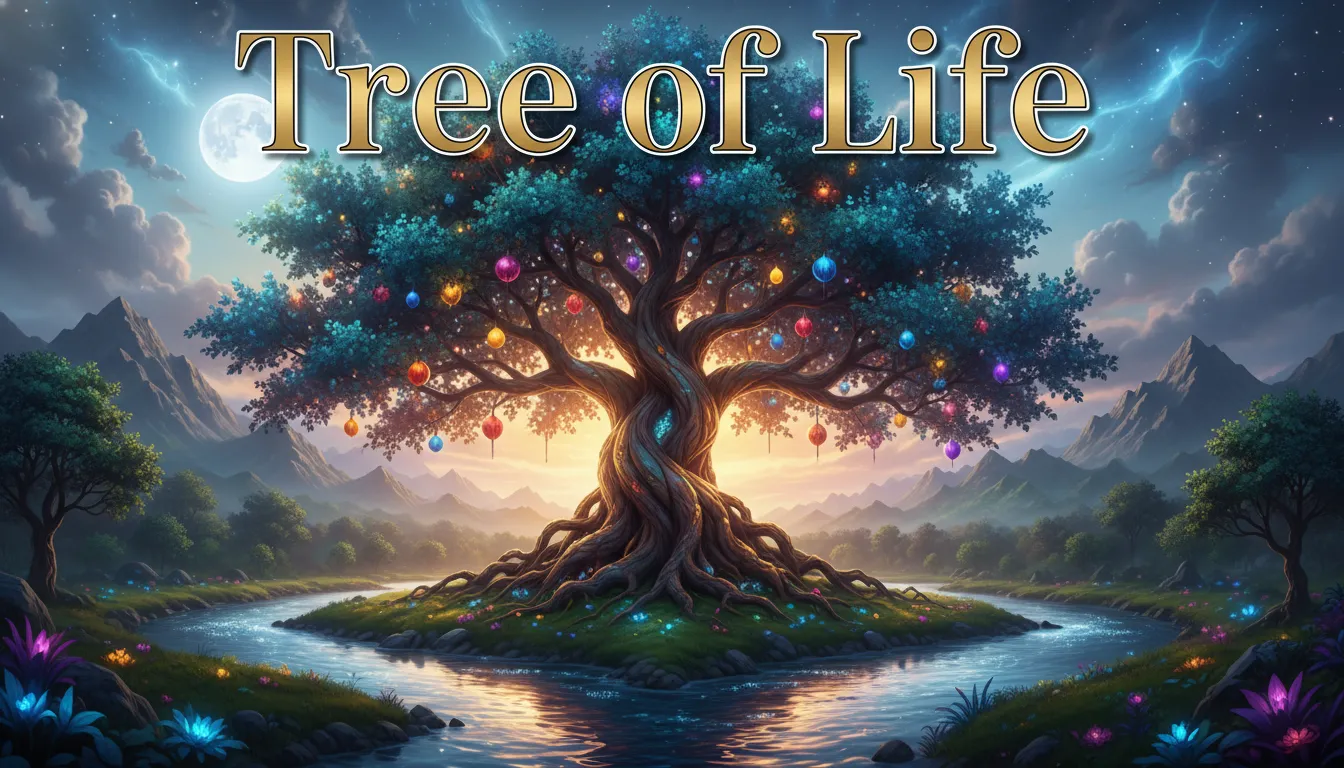
- Ezekiel 47:12 – “Fruit trees of all kinds will grow on both banks of the river. Their leaves will not wither, nor will their fruit fail. Every month they will bear fruit, because the water from the sanctuary flows to them. Their fruit will serve for food and their leaves for healing.”
- Revelation 22:2 – “Down the middle of the great street of the city. On each side of the river stood the tree of life, bearing twelve crops of fruit, yielding its fruit every month. And the leaves of the tree are for the healing of the nations.” Ezekiel saw this river six centuries before John did, and both men noticed the leaves.
- Genesis 8:11 – “When the dove returned to him in the evening, there in its beak was a freshly plucked olive leaf! Then Noah knew that the water had receded from the earth.” A single leaf was the first evidence that the world was healing.
- Isaiah 6:13 – “And though a tenth remains in the land, it will again be laid waste. But as the terebinth and oak leave stumps when they are cut down, so the holy seed will be the stump in the land.” A cut stump looks like the end. In Isaiah it is the beginning.
- Ezekiel 36:8 – “But you, mountains of Israel, will produce branches and fruit for my people Israel, for they will soon come home.”
It is worth noticing what the healing leaves in Ezekiel 47 and Revelation 22 have in common: in both visions the trees are fed by water flowing out from the presence of God. The leaves do the healing, but they are not the source. That distinction matters when we are tempted to look for healing in the remedy rather than in the One who supplies it. If you are praying for someone right now, these are good verses to pray for healing alongside.
Leaves and the Turning of the Seasons
- Matthew 24:32 – “Now learn this lesson from the fig tree: As soon as its twigs get tender and its leaves come out, you know that summer is near.”
- Mark 13:28 – “Now learn this lesson from the fig tree: As soon as its twigs get tender and its leaves come out, you know that summer is near.” Mark records the same saying, which tells us the disciples remembered it clearly.
- Song of Songs 2:13 – “The fig tree forms its early fruit; the blossoming vines spread their fragrance. Arise, come, my darling; my beautiful one, come with me.”
- Habakkuk 3:17-18 – “Though the fig tree does not bud and there are no grapes on the vines, though the olive crop fails and the fields produce no food, though there are no sheep in the pen and no cattle in the stalls, yet I will rejoice in the Lord, I will be joyful in God my Savior.”
- Leviticus 23:40 – “On the first day you are to take branches from luxuriant trees, from palms, willows and other leafy trees, and rejoice before the Lord your God for seven days.” God commanded a festival that involved gathering leaves by hand.
- Nehemiah 8:15 – “Go out into the hill country and bring back branches from olive and wild olive trees, and from myrtles, palms and shade trees, to make temporary shelters.”
The fig tree is the Bible’s clock. In Israel the fig loses its leaves completely in winter and is one of the last trees to leaf out again in spring, which is why new fig leaves were such a reliable signal that the season had genuinely turned. Jesus chose that particular tree because everyone listening had used it as a calendar their whole lives.
Leaves Without Fruit: The Warning of the Fig Tree
This is the theme most articles about leaves leave out, and it may be the sharpest one in Scripture. Leaves are what a tree shows the world. Fruit is what it actually produced. Jesus had something to say about the gap between them.
- Mark 11:13 – “Seeing in the distance a fig tree in leaf, he went to find out if it had any fruit. When he reached it, he found nothing but leaves, because it was not the season for figs.”
- Matthew 21:19 – “Seeing a fig tree by the road, he went up to it but found nothing on it except leaves. Then he said to it, May you never bear fruit again! Immediately the tree withered.”
- Mark 11:20-21 – “In the morning, as they went along, they saw the fig tree withered from the roots. Peter remembered and said to Jesus, Rabbi, look! The fig tree you cursed has withered!”
- Luke 13:6-7 – “A man had a fig tree growing in his vineyard, and he went to look for fruit on it but did not find any. So he said to the man who took care of the vineyard, For three years now I have been coming to look for fruit on this fig tree and have not found any. Cut it down! Why should it use up the soil?”
Mark’s account is honest enough to include a detail that puzzles readers: it was not the season for figs. Why would Jesus expect fruit out of season? The likely answer is agricultural. A fig tree in full leaf in that region normally carries early unripe figs called taqsh, which locals ate. Leaves without even those meant the tree was barren and would produce nothing later either. The tree was making a promise its roots could not keep, and that is exactly the point Jesus was making the week he entered Jerusalem. It is a warning about religion that looks impressive from a distance.
Withered Leaves as a Sign of Judgment
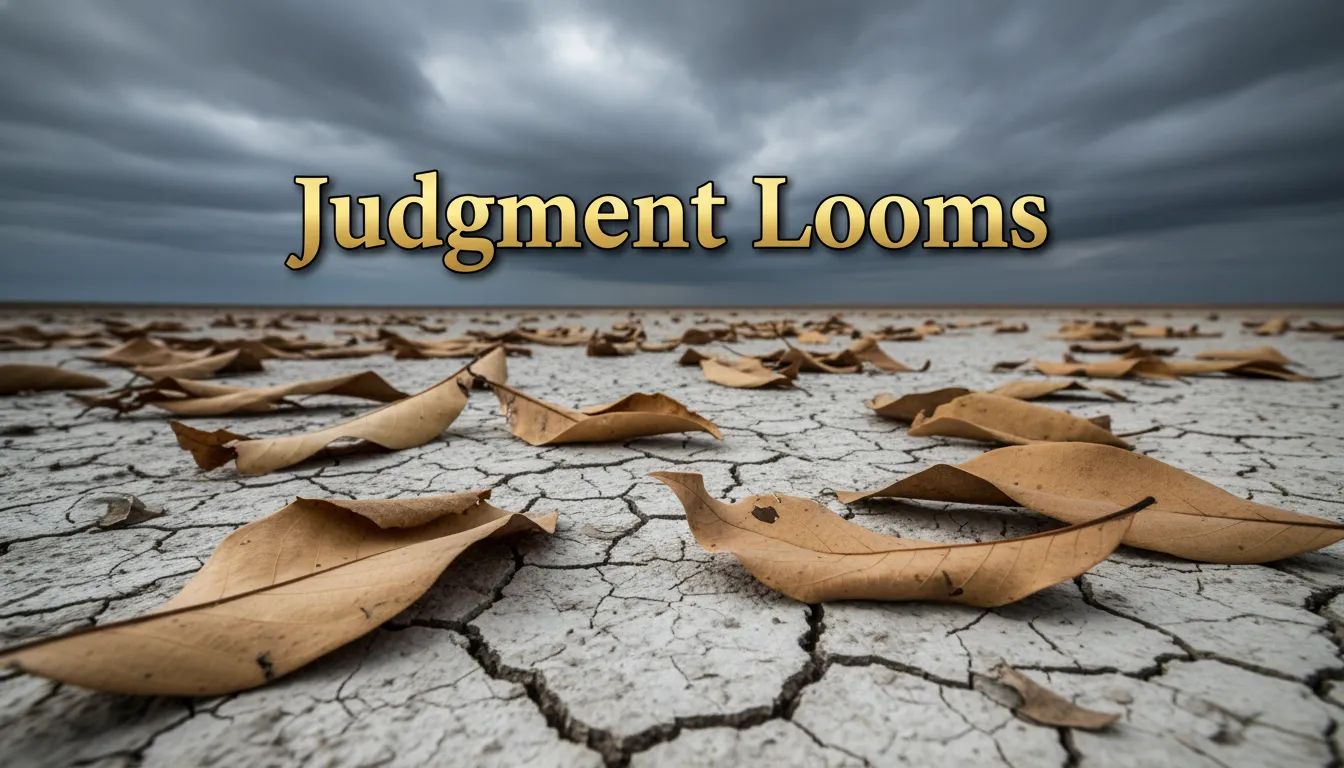
- Isaiah 1:30 – “You will be like a great tree with fading leaves, like a garden without water.”
- Isaiah 34:4 – “All the stars in the sky will be dissolved and the heavens rolled up like a scroll; all the starry host will fall like withered leaves from the vine, like shriveled figs from the fig tree.”
- Jeremiah 8:13 – “I will take away their harvest, declares the Lord. There will be no grapes on the vine. There will be no figs on the tree, and their leaves will wither.”
- Ezekiel 17:9 – “Will it not be uprooted and stripped of its fruit so that it withers? All its new growth will wither.”
- Joel 1:12 – “The vine is dried up and the fig tree is withered; the pomegranate, the palm and the apple tree, all the trees of the field are dried up. Surely the people’s joy is withered away.”
- Daniel 4:14 – “He called in a loud voice: Cut down the tree and trim off its branches; strip off its leaves and scatter its fruit. Let the animals flee from under it and the birds from its branches.”
- Leviticus 26:36 – “I will make their hearts so fearful in the lands of their enemies that the sound of a windblown leaf will put them to flight.” A leaf is almost weightless. Guilt makes even that sound terrifying.
- Job 13:25 – “Will you frighten a leaf that is blown by the wind? Will you chase after dry chaff?” Job is not describing judgment so much as protesting against it.
Isaiah 1:30 is worth sitting with, because of what it does not say. The tree is not struck by lightning or cut down by an enemy. It simply fades, the way a garden fades when nobody waters it. Much of what Scripture calls judgment works like that. It is less a blow from outside than the slow consequence of having walked away from the stream. If that describes where you are, these are honest verses rather than cruel ones, and there is no shame in bringing them to God as they are.
Leaves as Shelter and Shade
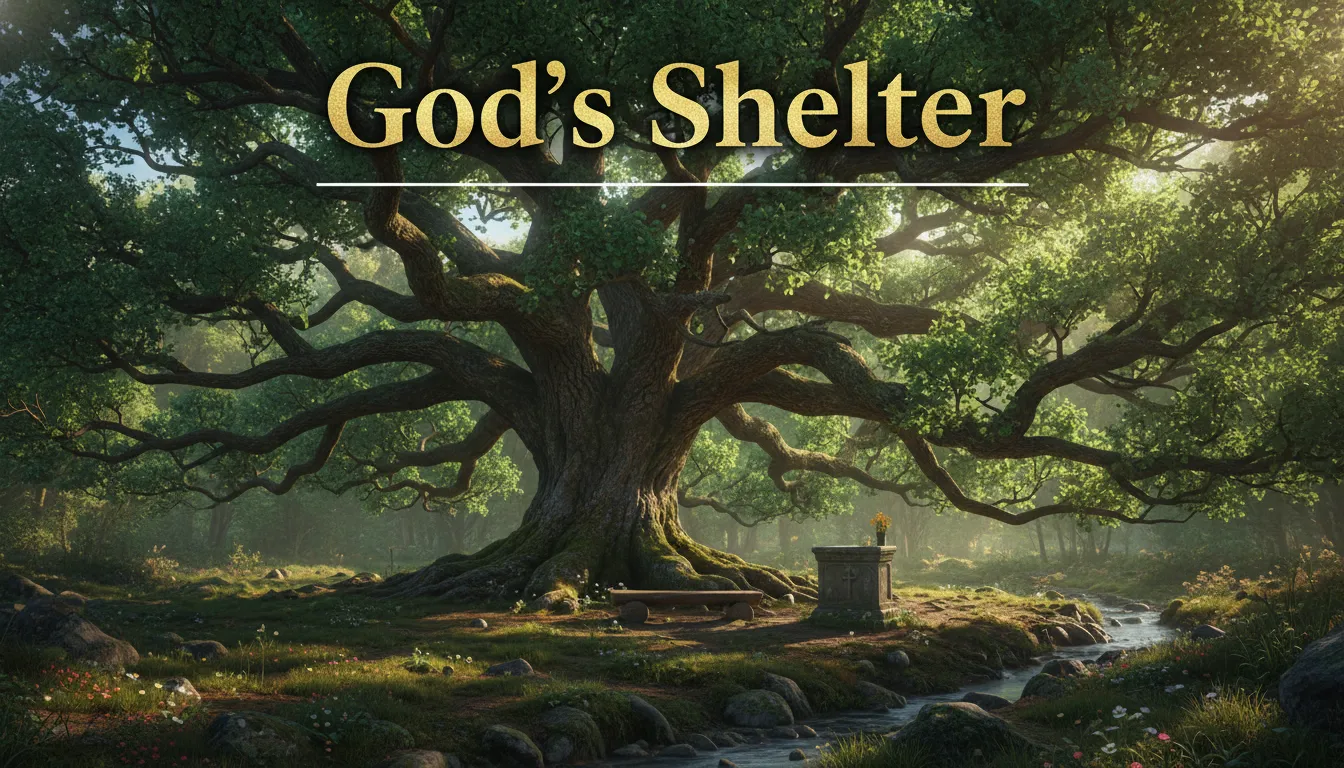
- Genesis 3:7 – “Then the eyes of both of them were opened, and they realized they were naked; so they sewed fig leaves together and made coverings for themselves.” The first human use of leaves was not shelter from the sun. It was shelter from being seen.
- Jonah 4:6 – “Then the Lord God provided a leafy plant and made it grow up over Jonah to give shade for his head to ease his discomfort, and Jonah was very happy about the plant.”
- Jonah 4:7 – “But at dawn the next day God provided a worm, which chewed the plant so that it withered.” God gave the leaves and God removed them, and Jonah learned more from the losing than the having.
- Ezekiel 17:23 – “It will produce branches and bear fruit and become a splendid cedar. Birds of every kind will nest in it; they will find shelter in the shade of its branches.”
- Matthew 13:32 – “Though it is the smallest of all seeds, yet when it grows, it is the largest of garden plants and becomes a tree, so that the birds come and perch in its branches.”
- Daniel 4:12 – “Its leaves were beautiful, its fruit abundant, and on it was food for all. Under it the wild animals found shelter, and the birds lived in its branches; from it every creature was fed.”
There is a quiet irony in placing Daniel 4:12 and Daniel 4:14 in the same article. The magnificent leafy tree that fed every creature and sheltered every bird is Nebuchadnezzar, and two verses later a voice from heaven orders its leaves stripped off. Shade is a genuine gift in Scripture. It is simply never meant to be mistaken for the source.
Palm Branches: Leaves of Victory and Praise
- Matthew 21:8 – “A very large crowd spread their cloaks on the road, while others cut branches from the trees and spread them on the road.”
- John 12:13 – “They took palm branches and went out to meet him, shouting, Hosanna! Blessed is he who comes in the name of the Lord! Blessed is the king of Israel!”
- Mark 11:8 – “Many people spread their cloaks on the road, while others spread branches they had cut in the fields.”
- Revelation 7:9 – “After this I looked, and there before me was a great multitude that no one could count, from every nation, tribe, people and language, standing before the throne and before the Lamb. They were wearing white robes and were holding palm branches in their hands.”
Palm branches were a recognised symbol of victory in the ancient world, which is why the crowd reached for them on the road into Jerusalem. What they expected was a military victory within the week. What they got, six days later, was a cross. Revelation 7 puts palm branches back into the hands of a crowd that no one can count, and this time the victory is the one that actually happened.
Leaves and the Shortness of Human Life
- Isaiah 64:6 – “All of us have become like one who is unclean, and all our righteous acts are like filthy rags; we all shrivel up like a leaf, and like the wind our sins sweep us away.”
- Isaiah 40:7-8 – “The grass withers and the flowers fall, because the breath of the Lord blows on them. Surely the people are grass. The grass withers and the flowers fall, but the word of our God endures forever.”
- Psalm 103:15-16 – “The life of mortals is like grass, they flourish like a flower of the field; the wind blows over it and it is gone, and its place remembers it no more.”
- James 1:10-11 – “For the sun rises with scorching heat and withers the plant; its blossom falls and its beauty is destroyed. In the same way, the rich will fade away even as they go about their business.”
These are the verses people skip, and they are the reason the green leaf of Psalm 1 means anything at all. Isaiah 40 does not say the grass withers and that is the end of the story. It sets our withering next to something that does not wither. The comfort in this passage is not that we last. It is that God’s word does, and that our short lives are held inside something that will still be standing when every leaf described in this article has fallen. If that thought lands heavily today, sit with a prayer of comfort before moving on.
What Do Leaves Symbolize in the Bible?
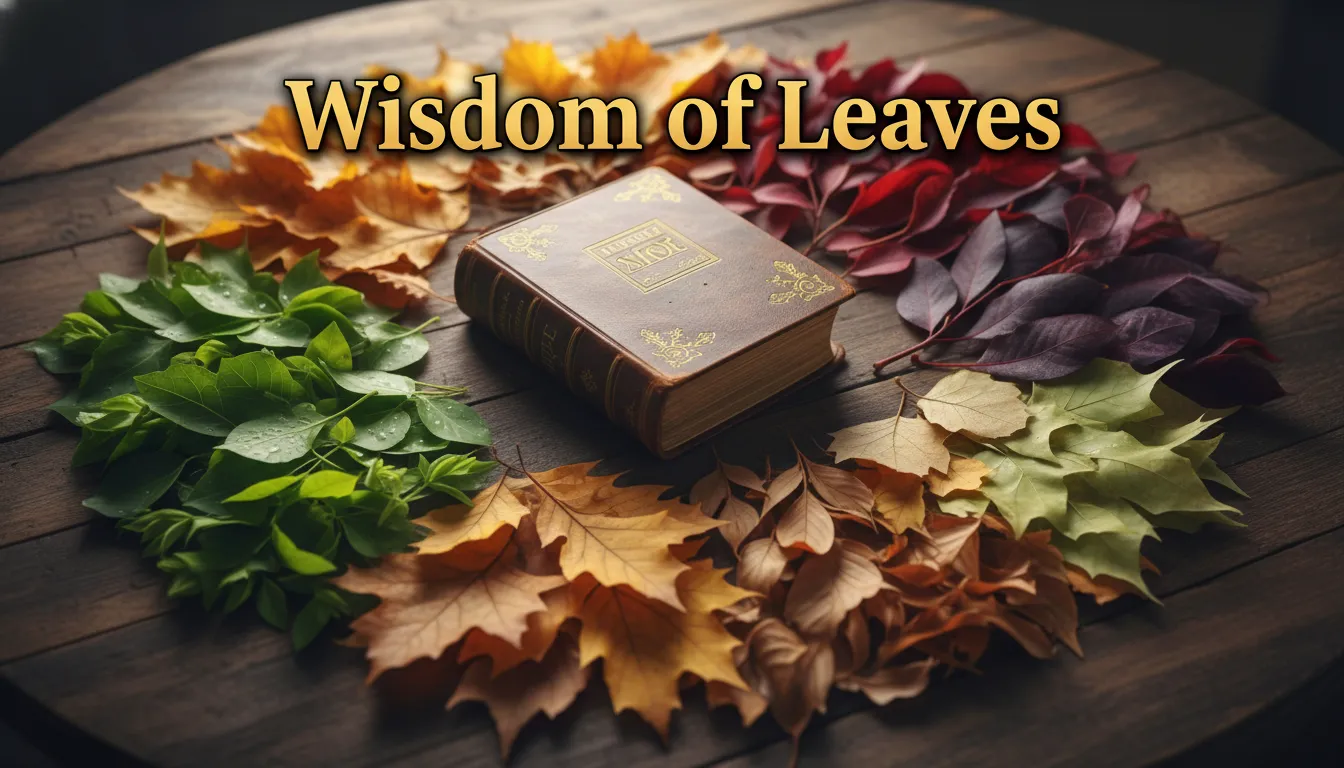
Leaves do not carry one fixed meaning in Scripture. The meaning depends entirely on what the leaves are doing in the passage, which is why reading a single verse in isolation can mislead you. Here is the pattern at a glance.
| What the leaves are doing | What it points to | Key verse |
|---|---|---|
| Green and never withering | A life rooted in God and fed from an unseen source | Psalm 1:3 |
| Given for healing | God restoring what was broken, for all nations | Revelation 22:2 |
| Newly budding on the twigs | A season about to turn, a sign to read | Matthew 24:32 |
| Present but with no fruit under them | Appearance without substance | Mark 11:13 |
| Fading, dry, stripped off | Judgment, and the slow cost of leaving the stream | Isaiah 1:30 |
| Spread out as shade | God’s practical provision and protection | Jonah 4:6 |
| Waved as palm branches | Victory and public praise | John 12:13 |
| Shrivelling and blown by wind | The shortness and frailty of human life | Isaiah 64:6 |
| Sewn together as a covering | Shame that hides rather than heals | Genesis 3:7 |
From Fig Leaves to Healing Leaves: The Arc of the Whole Bible
Here is the detail worth carrying away from this page. Leaves appear in the third chapter of the Bible and in the final chapter, and the two scenes answer each other.
In Genesis 3:7, two people who have just done the one thing they were told not to do reach for the nearest large leaves and stitch a covering. It is a picture of shame doing what shame always does: hiding, improvising, managing the appearance of a problem it cannot fix. Fig leaves dry out within days. The covering was never going to hold.
In Revelation 22:2, leaves appear again, and this time they are not taken by frightened hands. They are given. They grow on a tree fed by a river flowing from the throne of God, and their stated purpose is the healing of the nations. The same object that humanity first used to hide is the thing God finally uses to heal.
Between those two chapters sits everything else on this page: green leaves and withered ones, shade that was given and shade that was taken away, palm branches waved by a crowd that did not understand what it was celebrating. The Bible is honest about all of it. But it does not end with a leaf being sewn in a hurry. It ends with a leaf held out on an open hand, and that is a good place to leave the subject.
Two Short Prayers for a Dry Season
A Prayer When Your Leaves Are Fading
Father, I feel more like the tree in Isaiah 1 than the one in Psalm 1 today. Something in me has faded and I am not always sure when it started. I am not asking You to change the weather. I am asking You to move me back near the water. Send my roots down again into what is true about You rather than into what I can manage on my own. Let the green come back slowly if it must, but let it come back. In Jesus’ name, Amen.
A Prayer of Thanks for Shade
Lord, thank You for the ordinary shelters You have put over my head: the people, the provision, the small mercies I noticed and the many I did not. Like Jonah I have been happier about the plant than about the God who grew it. Teach me to receive the shade with gratitude and to hold it loosely, knowing You are the one who remains when it withers. Thank You for everything You have given. Amen.
Conclusion
These 45 Bible verses about leaves cover a wider range than most people expect. Leaves in Scripture speak of flourishing and of fading, of healing and of judgment, of shelter given and shelter withdrawn, of praise waved in the street and of a life as brief as a leaf in the wind. Read them as a set and the picture holds together: a tree does not stay green through effort but through where it is planted. The next time you notice leaves on a walk, whether new and bright or brown and letting go, you have a verse for either one. And if you need strength for the season you are in, Psalm 1:3 and Jeremiah 17:8 are good places to start and good places to stay.
Leaves have no single fixed meaning in Scripture. Their meaning depends on what they are doing in the passage. Green unwithering leaves picture a life rooted in God, as in Psalm 1:3. Leaves given for healing point to God’s restoration, as in Revelation 22:2. Withered or stripped leaves signal judgment, as in Isaiah 1:30. Leaves without fruit under them warn of appearance without substance, as in Mark 11:13.
Revelation 22:2 says the leaves of the tree of life are for the healing of the nations. Ezekiel 47:12 describes the same scene six centuries earlier, with trees beside a river flowing from the sanctuary whose “leaves will not wither” and whose “leaves for healing” serve alongside their fruit for food. In both visions the trees are fed by water flowing from the presence of God.
Genesis 3:7, where Adam and Eve sew fig leaves together to cover themselves after eating the forbidden fruit. It is a striking first appearance, because the Bible’s final chapter also mentions leaves, this time given for the healing of the nations in Revelation 22:2. The same object humanity first used to hide is the one God uses at the end to heal.
Because a tree cannot make its own leaves green. It draws water through roots nobody can see. Psalm 1:3 and Jeremiah 17:8 both use this image, and both mention heat and drought on purpose. The promise is not that hard seasons will not come, but that a person fed from the right source stays green when they do.
Mark 11:13 notes honestly that it was not the season for figs, which puzzles many readers. The likely explanation is agricultural: a fig tree in full leaf in that region normally carries small early figs, so leaves with nothing at all beneath them meant the tree was barren and would bear nothing later either. The tree was making a promise its roots could not keep, which is precisely the warning Jesus was giving about religion that looks impressive from a distance.
They usually signal judgment or human frailty. Isaiah 1:30 compares an unfaithful people to “a great tree with fading leaves, like a garden without water.” Isaiah 64:6 says “we all shrivel up like a leaf.” Notice that in Isaiah 1 the tree is not struck down by an enemy; it simply fades from lack of water, which is how much of Scripture describes judgment working.
Palm branches were a widely recognised symbol of victory in the ancient world, which is why the crowd in John 12:13 waved them as Jesus entered Jerusalem. They also featured in the Feast of Tabernacles, where Leviticus 23:40 commanded the people to gather branches from palms and other leafy trees. Revelation 7:9 places palm branches in the hands of a countless multitude before the throne.
They give you honest language for whatever season you are in. If things are growing, Psalm 92:14 promises you can stay fresh and green even into old age. If something has faded, Job 14:7-9 says a cut stump can bud again at the scent of water. If you feel as brief as a leaf in the wind, Isaiah 40:8 sets your short life next to a word that endures forever. There is a leaf verse for a good year and one for a hard one.





- Be Respectful
- Stay Relevant
- Stay Positive
- True Feedback
- Encourage Discussion
- Avoid Spamming
- No Fake News
- Don't Copy-Paste
- No Personal Attacks
- Be Respectful
- Stay Relevant
- Stay Positive
- True Feedback
- Encourage Discussion
- Avoid Spamming
- No Fake News
- Don't Copy-Paste
- No Personal Attacks
