50 Short Exhortation About Giving Tithes And Offering
Published: 22 Aug 2026
A short exhortation about giving tithes and offering is one of the most useful things a church leader, a Sunday school teacher, or a small group host can keep on hand. You have two minutes before the offering plate goes round, and you want to say something that actually moves a heart rather than filling silence. This page gives you 70 short exhortations grouped by theme, the 15 Bible verses that giving is built on quoted in full, a plain explanation of the difference between a tithe and an offering, simple steps for working out what to give, and an honest word about what Scripture does and does not promise the giver. Read what you need and use it freely.
Why We Give Tithes and Offerings
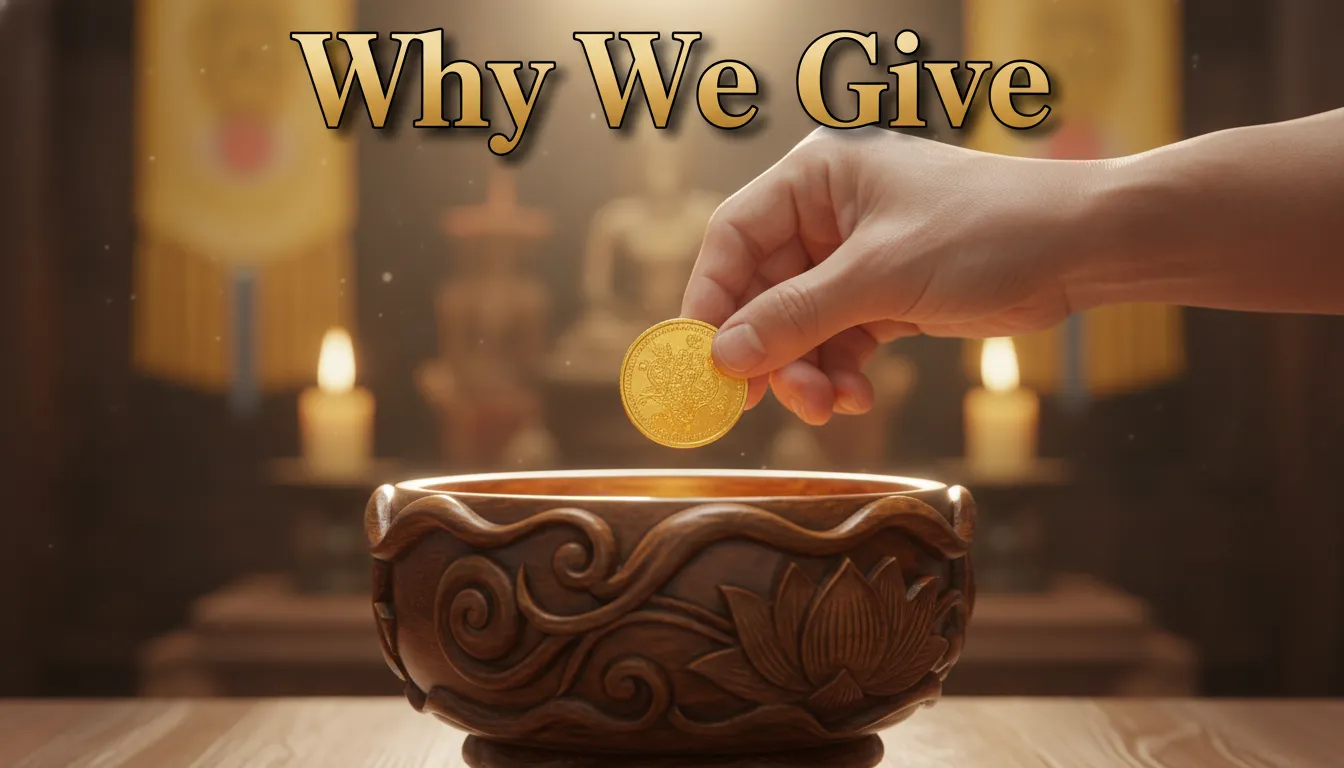
- When you give to God before you spend on anything else, you are saying with your money what you already say with your mouth: that He comes first.
- Every skill you earn a living with was given to you. Giving a portion back is simply returning a little of what was never ours to begin with.
- Giving is one of the few acts of worship you cannot fake. Your bank statement tells the truth about what you love.
- Your gift keeps the lights on, pays a pastor who has bills like everyone else, and puts food in the hands of a family in this church who is too proud to ask.
- God is a giver by nature. Every time you give, you practise being a little more like Him.
- Somewhere a child will hear about Jesus this year because a stranger they will never meet put money in a plate. That stranger can be you.
- Love that costs nothing is only a feeling. Giving is what turns love for God and His people into something real.
- God owns everything already. He asks for a portion not because He needs it, but because handing it over changes us.
- Money held too tightly has a way of quietly becoming the thing you trust. Regular giving keeps its grip loose.
- Giving is not a tax on the blessed. It is the response of someone who has counted what they have and found it to be a gift.
Sit in enough church services and you hear the same honest question every time the offering is announced: why should I give? The answer that satisfies people is rarely the one about budgets and building funds. It is the one that names giving as worship. When you set aside a portion of your income before your bills, you are making a statement about who holds first place in your life. That is also why some of the most peaceful givers you will meet are the ones with the least in the bank. They are not giving out of surplus. They are giving out of a settled conviction, and it shows on their faces on the way out of the building.
What the Bible Actually Says About Tithes and Offerings
Most exhortations about giving lean on a verse or two. It helps to read the whole picture, so here are the fifteen passages that matter most, quoted rather than summarised, moving from the Old Testament to the New.
- Genesis 14:20 – “And praise be to God Most High, who delivered your enemies into your hand. Then Abram gave him a tenth of everything.” This is the first tithe in Scripture, given by Abram to Melchizedek long before the law was written.
- Genesis 28:22 – “and this stone that I have set up as a pillar will be God’s house, and of all that you give me I will give you a tenth.” Jacob’s vow at Bethel, made as a response to God’s promise rather than a payment for it.
- Leviticus 27:30 – “A tithe of everything from the land, whether grain from the soil or fruit from the trees, belongs to the Lord; it is holy to the Lord.”
- Deuteronomy 14:22 – “Be sure to set aside a tenth of all that your fields produce each year.”
- Deuteronomy 16:17 – “Each of you must bring a gift in proportion to the way the Lord your God has blessed you.” Notice that the amount is measured against what you have received, not against what your neighbour gives.
- Malachi 3:10 – “Bring the whole tithe into the storehouse, that there may be food in my house. Test me in this, says the Lord Almighty, and see if I will not throw open the floodgates of heaven and pour out so much blessing that there will not be room enough to store it.”
- Proverbs 3:9-10 – “Honor the Lord with your wealth, with the firstfruits of all your crops; then your barns will be filled to overflowing, and your vats will brim over with new wine.”
- Proverbs 11:24-25 – “One person gives freely, yet gains even more; another withholds unduly, but comes to poverty. A generous person will prosper; whoever refreshes others will be refreshed.”
- Proverbs 19:17 – “Whoever is kind to the poor lends to the Lord, and he will reward them for what they have done.”
- Matthew 6:3-4 – “But when you give to the needy, do not let your left hand know what your right hand is doing, so that your giving may be in secret. Then your Father, who sees what is done in secret, will reward you.”
- Matthew 23:23 – “Woe to you, teachers of the law and Pharisees, you hypocrites! You give a tenth of your spices, mint, dill and cumin. But you have neglected the more important matters of the law: justice, mercy and faithfulness. You should have practiced the latter, without neglecting the former.” Jesus does not cancel the tithe here. He refuses to let it become a substitute for a just and merciful life.
- Mark 12:43-44 – “Calling his disciples to him, Jesus said, Truly I tell you, this poor widow has put more into the treasury than all the others. They all gave out of their wealth; but she, out of her poverty, put in everything, all she had to live on.” The only gift Jesus ever praised by name was the smallest one in the building.
- Luke 6:38 – “Give, and it will be given to you. A good measure, pressed down, shaken together and running over, will be poured into your lap. For with the measure you use, it will be measured to you.”
- 1 Corinthians 16:2 – “On the first day of every week, each one of you should set aside a sum of money in keeping with your income, saving it up, so that when I come no collections will have to be made.” Regular, planned, proportional. Paul’s instruction is remarkably practical.
- 2 Corinthians 9:6-7 – “Remember this: Whoever sows sparingly will also reap sparingly, and whoever sows generously will also reap generously. Each of you should give what you have decided in your heart to give, not reluctantly or under compulsion, for God loves a cheerful giver.”
Two things stand out when you read these together. First, giving in Scripture is always proportional and always decided in advance, never squeezed out of someone in the moment. Second, 2 Corinthians 8:12 puts a fence around the whole subject: “For if the willingness is there, the gift is acceptable according to what one has, not according to what one does not have.” God measures the willingness, not the total.
Tithe and Offering: What Is the Difference?
These two words get used as if they mean the same thing, and that confuses people who are trying to do the right thing. They are related but not identical.
| Tithe | Offering |
|---|---|
| A set proportion, traditionally one tenth | Any amount you choose |
| Given regularly, usually from income | Given as need or gratitude prompts it |
| Rooted in Leviticus 27:30 and Deuteronomy 14:22 | Rooted in 2 Corinthians 9:7 and Exodus 35:29 |
| Normally supports the local church and its ministry | Often directed to a specific need, mission, or person |
| Comes first, before other spending | Comes out of what remains, above the tithe |
Put simply, the tithe is the baseline and the offering is everything beyond it. Someone who gives one tenth every month and then hands an extra amount to a family who lost work has given both a tithe and an offering. Someone who has never worked out a proportion but drops whatever is in their pocket has given an offering only. Neither person is condemned in Scripture, but the first has a plan, and a plan is what keeps giving alive when feelings run dry.
Faith and Trust When You Give

- Giving is hardest in the month when it matters most. That is not a sign you should stop. It is the moment your trust becomes something more than a word.
- Faith is not certainty about the outcome. It is obedience without the outcome in hand.
- The God who feeds birds that own nothing has not forgotten the family that gives out of very little.
- Fear counts what is left. Faith counts who is holding it.
- Christ gave His life before you ever gave a coin. Every act of giving stands downstream of that one.
- God is not comparing your gift to the person beside you. He is looking at the heart it left.
- A cheerful giver is not someone who finds it easy. It is someone who has decided in advance and so gives without resentment.
- You do not need to wait until you are comfortable to start. A tenth of a small income is still a tenth.
- No gift given quietly is wasted. God sees what is done in secret and He does not overlook it.
- Kindness to the poor is described in Proverbs 19:17 as lending to the Lord. There is no safer place to put anything.
Faith is easy to preach and hard to practise when the money is tight. Anyone who has held a folded note in a closed hand while the plate came closer knows the feeling. What people describe afterwards is rarely a windfall. It is more often a quiet provision they had not planned for: a bill smaller than expected, an unexpected hour of work, a friend who paid for dinner. Scripture does not promise that giving reverses a bad month. What it does say, again and again, is that the giver is not forgotten. That is a different promise and, for most people who have tested it, a more durable one.
The Joy of Giving
- There is a lightness that follows a gift you did not have to give. Acts 20:35 calls it being blessed, and it arrives before any return does.
- Giving is one of the few things in church life that is genuinely enjoyable to do together.
- Your gift joins a work far larger than your envelope. That is a good feeling and an accurate one.
- Closed hands cannot receive. Giving is how you keep them open.
- The generous people in Scripture are almost never the unhappy ones. That pattern is worth noticing.
- Holding money too tightly is its own punishment. It makes a small life out of a large income.
- Children learn generosity by watching, not by being told. Let them see you decide and see you give.
- Giving is a conversation with God that uses no words. Sometimes it is the only honest prayer we manage all week.
- A church where people give freely feels different the moment you walk in. Generosity is contagious in the best way.
- Joy is not the reward for giving. It is part of the act itself, which is why the widow left richer than the wealthy did.
People assume joy and money pull in opposite directions, and giving is where that assumption falls apart. Watch faces at an offering and you can usually tell who decided in advance and who is being cornered. The first group looks lighter afterwards. The second looks relieved it is over. That difference has almost nothing to do with the amount involved. It comes down to whether the gift was chosen or extracted, which is exactly the distinction Paul draws when he writes that God loves a cheerful giver and not a reluctant one.
Short Exhortations for When Money Is Tight
These are for the weeks when the numbers do not work. They are deliberately gentle, because the last thing a struggling family needs from the front of a church is pressure.
- If all you can give this week is small, give it and give it without apology. 2 Corinthians 8:12 says the gift is measured by what you have, not by what you do not.
- Nobody in this room is keeping score of your envelope. God is not either.
- A tenth of very little is a real tithe. Do not let the size of the number talk you out of the habit.
- If you cannot give money this month, give time. The church needs hands as much as it needs funds.
- Do not borrow in order to give. Scripture asks for willingness, never for debt.
- Feed your children first. A God who calls Himself Father is not asking you to choose between Him and them.
- Giving something small every week builds more than giving something large once a year.
- If shame is the reason you are giving, stop and pray first. God can wait a week for a willing heart.
- The widow in Mark 12 was poorer than anyone reading this, and she is the one Jesus pointed to.
- Seasons change. If this is a year of receiving rather than giving, receive with grace and give again when you can. Ask God for strength in the meantime.
Understanding Giving

- A tithe means a tenth. On an income of two thousand, the tithe is two hundred. The arithmetic is the easy part.
- Giving is not a bill and the church is not a creditor. The moment it feels like a debt, something has gone wrong in the teaching.
- The first gift recorded in Scripture came from Abram in Genesis 14, centuries before any law required it. Giving started as gratitude, not regulation.
- Firstfruits means first, not leftover. Proverbs 3:9 is about the order of your spending as much as the amount.
- The Bible links giving to receiving, but the return described is rarely limited to money. Luke 6:38 speaks of measure, not of currency.
- Deciding your percentage once, in a quiet moment, removes the weekly argument with yourself.
- You can give money, skill, time, or hospitality. A mechanic who services the church van has given a real offering.
- Ask where the money goes. A church that cannot answer that clearly has a problem, and it is not your problem for asking.
- Paul compares giving to sowing in 2 Corinthians 9:6. A farmer who eats his seed corn has a full stomach and an empty field.
- When you give, you step into a practice thousands of years old. Abram, Jacob, the widow, and the Corinthian churches all stood where you are standing.
Plenty of faithful people give without ever having been taught what they are doing, and the confusion costs them peace. Once the mechanics are clear, the arguing tends to stop. One tenth sounds like a lot until it is set against the list of things that arrived in your life without you arranging them. What usually changes people is not a stronger sermon but a clearer explanation, given without pressure, in a room where nobody is watching their hands.
How to Work Out Your Tithe: Simple Steps
This is the part most articles skip. Here is a workable method, along with honest notes where Scripture leaves the decision to you.
- Choose gross or net, then stay consistent. The Bible does not settle this. Those who give on gross income point to the principle of firstfruits in Proverbs 3:9. Those who give on take home pay point out that tax was never theirs to give. Either is defensible. Switching back and forth whenever it suits you is what erodes the habit.
- Set it aside the day the money arrives. 1 Corinthians 16:2 tells the Corinthians to put a sum aside on the first day of every week. Giving from what is left at the end of the month means giving from whatever the month did not consume, which is usually nothing.
- If your income is irregular, work per payment rather than per month. Self employed workers, drivers, traders, and anyone paid on commission do better setting the percentage aside from each payment as it lands. Waiting for a clear month rarely works.
- Automate it if you are forgetful. A standing order is not less spiritual than cash in a plate. It simply removes the chance of good intentions failing on a busy Sunday.
- Decide in advance about bonuses, gifts, and windfalls. Many people tithe on these as income. Others treat a gift differently from wages. Scripture does not rule on it, so make the decision before the money arrives, not after you have seen the amount.
- If you are carrying debt, keep giving something and keep paying it down. Stopping altogether usually breaks the habit for good. Borrowing in order to give is worse. A smaller consistent gift while you clear what you owe is the honest middle path.
- Plan your offerings separately from your tithe. Keep a small amount set aside for the need that appears without warning, so that generosity does not always have to come out of your grocery money.
God’s Promises for Givers

- Luke 6:38 promises a return measured out generously. It does not specify the currency, and most people who have given for years will tell you the return arrived in forms they did not expect.
- Malachi 3:10 is the one place in Scripture where God invites His people to test Him. That invitation still stands, and it was given to a nation that had been holding back.
- Matthew 6:4 says your Father sees what is done in secret. The gift nobody noticed was not lost.
- Proverbs 19:17 calls kindness to the poor a loan made to the Lord. He has never defaulted on one.
- Acts 20:35 records Jesus saying it is more blessed to give than to receive. The blessing is attached to the giving itself, not to what follows it.
- Proverbs 11:25 says the one who refreshes others will be refreshed. Generous people are carried by other generous people, and that is not an accident.
- Philippians 4:19 promises that God will meet your needs according to His riches in glory. Paul wrote that sentence to a church that had just given sacrificially to him.
- 2 Corinthians 9:8 says God is able to make grace abound to you so that you can abound in every good work. The stated purpose of the supply is more giving.
- Generosity has a way of opening doors that money cannot buy: trust, friendship, and a reputation your children inherit.
- Matthew 6:20 speaks of treasure stored in heaven where nothing decays. Some of what you give is not meant to return in this life at all.
God keeps His promises, but it matters enormously which promises we are quoting. Ask a room of long term givers what came back to them and the answers are strikingly consistent: work that appeared at the right moment, a bill that turned out smaller, a relationship mended, a peace about money that they did not have before. Almost nobody says their income multiplied. That should shape how we speak from the front of a church. Promising a return that Scripture never promised sets people up to feel cheated by God, and He deserves better representation than that.
Short Exhortations to Read Before the Offering
Each of these stands alone and takes under fifteen seconds to read aloud. They are written for the moment just before the plate moves.
- Before we give, let us remember that everything in our hands arrived there as a gift. We are returning a portion, not surrendering a possession.
- Give what you decided, not what you feel in this moment. Paul says the cheerful giver is the one who chose beforehand.
- This offering will pay for things you will never see and help people you will never meet. That is exactly the point.
- If you are visiting today, please let this pass you by. You owe us nothing and you are welcome here either way.
- God is not short of money. He is inviting you into the work, and that invitation is the blessing.
- Bring the whole tithe, says Malachi 3:10, and test me in this. Very few verses in Scripture end with an invitation like that.
- The smallest gift Jesus ever praised came from a woman with two coins to her name. Size has never been the measure.
- Let us give quietly. No one needs to see your hand, and Matthew 6 says your Father already does.
- Sowing and harvest run on different clocks. Give today and leave the timing where it belongs.
- Whatever you place in this plate, place your worry there with it. God is able to carry both.
An Honest Word About Giving and Money
Any page about tithes and offerings that only says encouraging things is leaving out the part people most need to hear. Three honest notes are worth making.
The New Testament never repeats the ten percent command
This surprises people, so it is worth stating plainly. The tithe in the Old Testament was tied to the land of Israel, to agricultural produce, and to the support of the Levites who had no land of their own. When the New Testament writers teach on giving, they do not restate the ten percent figure. Instead they call for giving that is proportional to income, planned in advance, regular, and cheerful, as in 1 Corinthians 16:2 and 2 Corinthians 9:7. Many Christians keep the tenth because it is a clear, tested, and generous starting point, and because Jesus assumed the practice in Matthew 23:23 rather than abolishing it. That is a good reason to keep it. It is not the same as a command, and honest teachers say so.
Giving is not an investment scheme
Luke 6:38 and Malachi 3:10 are real promises and should be preached. But there is a large distance between “God will not forget the giver” and “put in fifty and God will hand you back five hundred.” Scripture nowhere guarantees that a financial gift produces a financial profit. The people held up as models of giving in the Bible include a widow who gave her last two coins and a Macedonian church described in 2 Corinthians 8:2 as giving out of extreme poverty. Neither story ends with a windfall. If a message about giving sounds more like a return on capital than an act of worship, hold it at arm’s length.
Pressure, shame, and debt have no place in it
The single clearest instruction in the New Testament on how to give is that it must not be done reluctantly or under compulsion. That rules out a great deal of what happens in some churches: repeated appeals designed to wear people down, public comparison of amounts, and the suggestion that a believer should borrow money to give. If you are being pushed towards debt in the name of faith, the pressure is coming from a person and not from Scripture. Give what you have decided in your heart to give, and let that be enough, because 2 Corinthians 9:7 says it is.
Short Prayers Before You Give
A Prayer Over Your Tithe
Father, everything I am holding came from Your hand first. I bring this portion back to You gladly and not out of duty. Use it for Your work in this church and in this town. Where it feeds someone, let them be fed. Where it teaches someone, let them learn. Keep my heart from pride in what I give and from fear about what remains. Teach me to trust You with the whole of my income and not only with this part of it. In Jesus’ name, Amen.
A Prayer When Giving Feels Hard
Lord, You know exactly what is in my account this month and You know what I owe. I am not giving this easily, so I am asking for a willing heart to go with it. Steady me where I am anxious. Provide for my family as You have promised to do. Let me give without resentment and without pretending, and let this small gift be acceptable to You because the willingness is there. Amen.
A tithe is a set proportion of your income, traditionally one tenth, described in Leviticus 27:30 as belonging to the Lord. An offering is any gift given beyond that, chosen freely according to gratitude or need. The tithe is the baseline and planned in advance. The offering is everything above it.
Giving is an act of worship that puts God ahead of your own spending, which is why Proverbs 3:9 speaks of firstfruits. Practically, it funds the local church, supports those who teach, and provides for people in genuine need. It also loosens the grip money quietly gains on anyone who never gives it away.
The New Testament does not repeat the ten percent command. It teaches giving that is proportional to income, planned, regular, and cheerful, as in 1 Corinthians 16:2 and 2 Corinthians 9:7. Many Christians keep the tenth because it is a clear and generous starting point and because Jesus assumed the practice in Matthew 23:23. It is best understood as a wise pattern rather than a legal requirement.
Scripture does not settle this. Giving on gross income follows the firstfruits principle of Proverbs 3:9. Giving on take home pay reflects the view that tax was never yours to give. Both positions are held by faithful Christians. Choose one, write it down, and stay consistent, because switching whenever it suits you is what quietly ends the habit.
Luke 6:38 promises a generous return, Malachi 3:10 promises open floodgates, and Matthew 6:4 promises that secret giving is seen and rewarded. What Scripture does not promise is a financial profit on a financial gift. The widow of Mark 12 and the Macedonian church of 2 Corinthians 8:2 both gave out of poverty and are held up as models, not as cautionary tales.
Keep giving something, even a small amount, while you work at clearing what you owe. Stopping completely usually breaks the habit for years. Borrowing money in order to give is worse and has no support in Scripture, which asks for willingness and never for debt. A modest consistent gift alongside a serious repayment plan is the honest path.
Yes. 2 Corinthians 8:12 says the gift is acceptable according to what a person has, not according to what they do not have. A tenth of a small income is a genuine tithe. The only gift Jesus singled out for praise was the two coins of a poor widow in Mark 12:43-44, which was the smallest amount given that day.
The pattern in Scripture is support for the local body of believers you belong to and for those who teach within it, with offerings directed to specific needs and missions beyond that. It is entirely reasonable to ask your church how the money is used. A church that cannot answer that question clearly has a problem, and asking it is good stewardship rather than a lack of faith.






- Be Respectful
- Stay Relevant
- Stay Positive
- True Feedback
- Encourage Discussion
- Avoid Spamming
- No Fake News
- Don't Copy-Paste
- No Personal Attacks
- Be Respectful
- Stay Relevant
- Stay Positive
- True Feedback
- Encourage Discussion
- Avoid Spamming
- No Fake News
- Don't Copy-Paste
- No Personal Attacks
